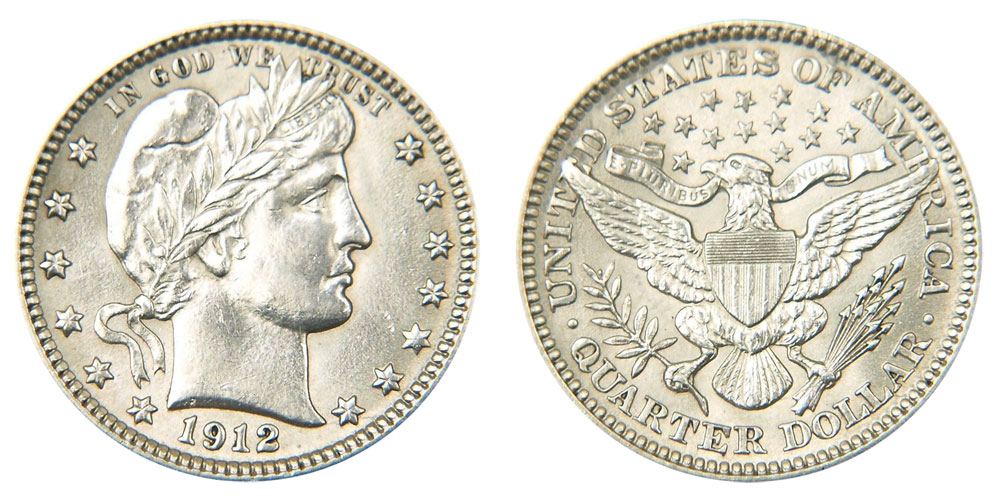
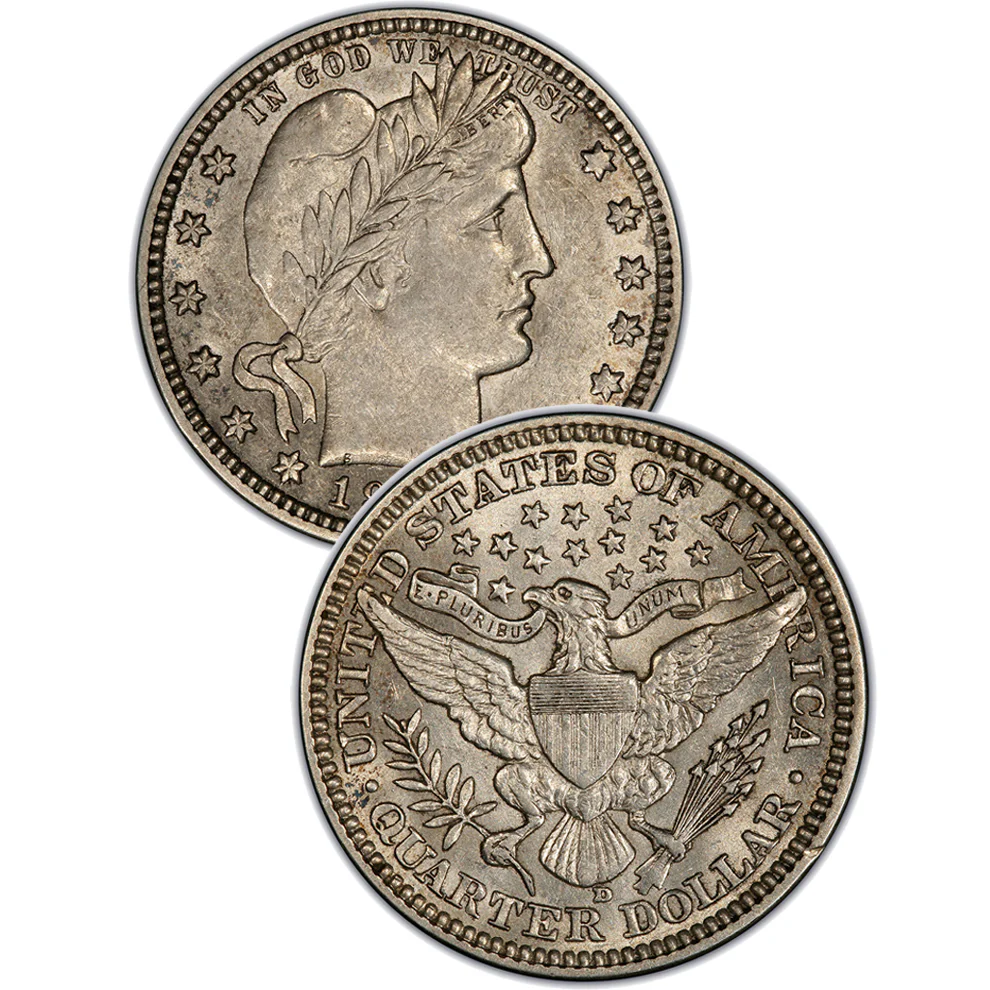
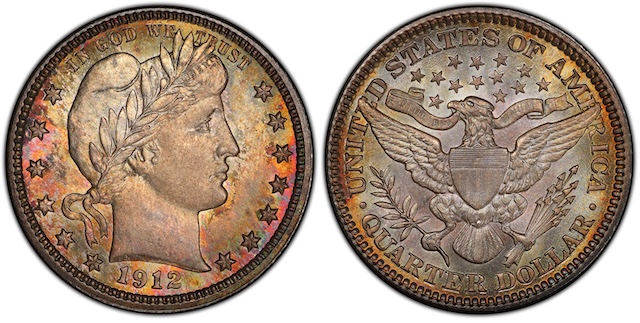
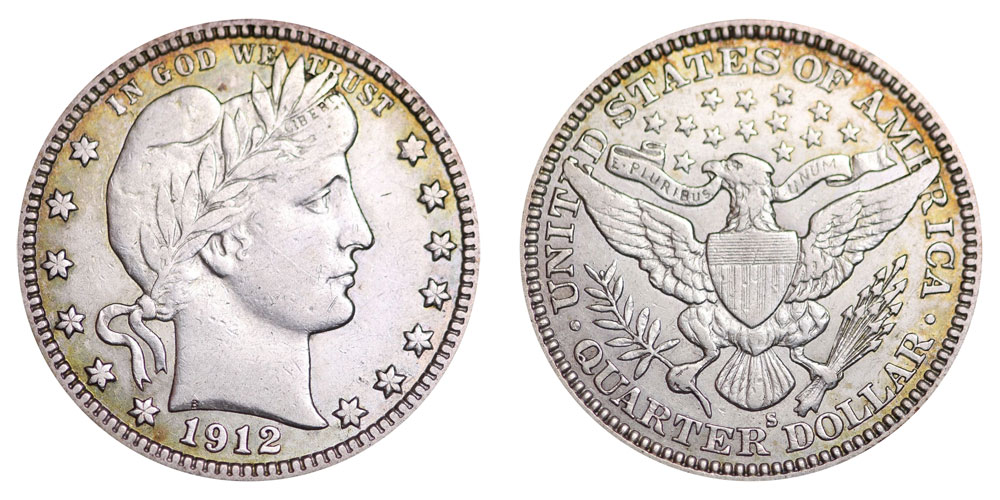
The Valuable 1912 Barber Quarter Errors (Complete Guide)
The 1912 Barber Quarter carries no major attributed die varieties in the standard CONECA or Cherrypickers' Guide listings, but genuine mint production errors do surface in the marketplace. Each of the following error types has been authenticated by PCGS or NGC on Barber Quarter specimens — including 1912-dated examples. Understanding what to look for gives you an advantage when searching rolls, junk boxes, or estate lots.
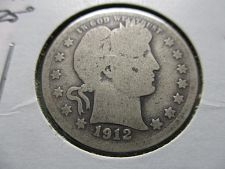
An off-center strike results when a planchet is improperly seated inside the collar ring at the moment the upper and lower dies close. Because the blank sits to one side, only a portion of the dies' design is impressed onto the coin's surface, leaving the remainder of the planchet unstruck and showing the original rolled blank stock.
Visually, the coin displays a crescent-shaped blank area with the reeded edge still intact on that side, while the opposite side carries the Lady Liberty obverse design and Barber eagle reverse shifted toward the struck portion. At 5–10% off-center with the full date visible, premiums are modest. At 40–90% off-center — where the date and mint mark remain legible — the error becomes genuinely dramatic and far more desirable to error collectors.
Value is primarily driven by two criteria: the percentage of displacement and whether the date (and 'S' mint mark for San Francisco pieces) remains fully visible. A 1912-S struck 50%+ off-center with a legible date commands the highest premiums in the series, as the combination of semi-key date identity and dramatic error type is rare. Submit all off-center Barber quarters to PCGS or NGC to authenticate against post-mint alterations marketed as genuine strikes.
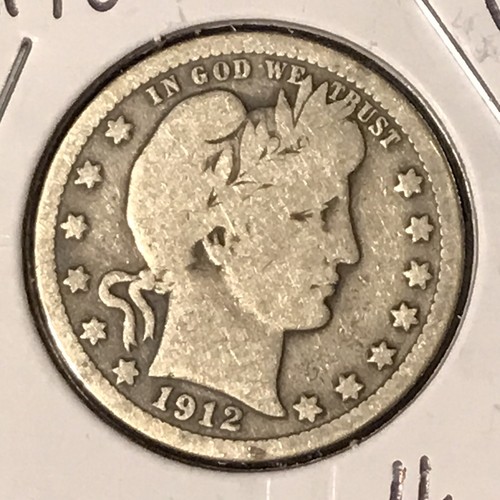
Lamination errors originate during the production of the silver strip from which planchets are punched. Impurities — typically gas pockets, foreign metallic inclusions, or subsurface voids in the alloy — become trapped between layers of the metal during rolling. These weaknesses remain invisible during striking but manifest later as flaking, peeling, or detached sections of the coin's surface.
Two forms appear: a retained lamination, where the flaking section is still attached (like a partially peeled sticker), and a detached lamination, where a piece has separated entirely and left a recessed void in the surface. On 90% silver alloy coins like the 1912 Barber Quarter, lamination flaws appear as irregular lighter-colored delaminations on the fields or devices. Major retained flaps that bend dramatically away from the coin's surface are the most visually striking and command the highest values.
Minor lamination flakes are acknowledged on older silver coins and add negligible premium to most circulated examples. The collectible tier begins when the flaw is large (covering more than 5mm of surface area), dramatically retained with a visible flap, or positioned over the main design elements — particularly Lady Liberty's portrait or the eagle's chest. Certification by PCGS or NGC with an "Mint Error — Lamination" designation locks in the premium and ensures a buyer that the flaw is genuine rather than post-mint damage.
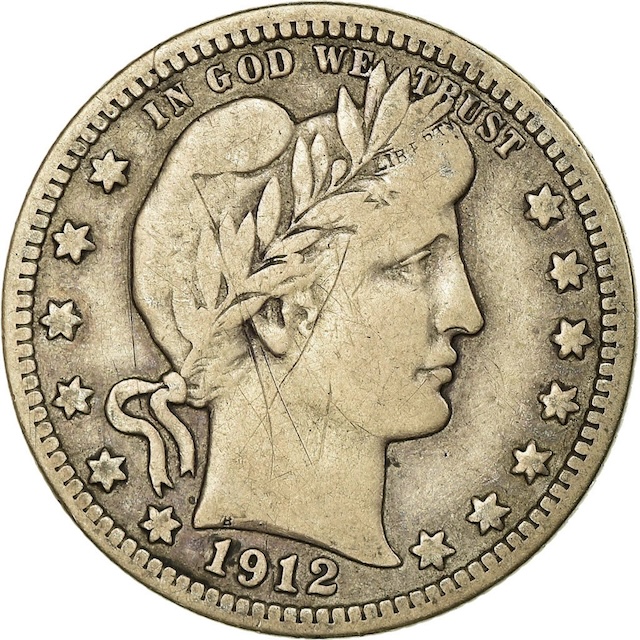
Die breaks develop when repeated striking cycles cause fatigue cracks to propagate through a working die. Because the die is a hardened steel tool that transfers its mirror image onto the planchet, cracks in the die produce raised lines on the struck coin — the metal flows into the crack channel. A cud is the most extreme form: when a portion of the die face breaks away entirely at or near the rim, every subsequent coin struck by that broken die shows a raised, unstruck blob of flat metal where the die surface was missing.
Minor die cracks appear as thin, hairline-width raised lines running through fields or across design elements. These are extremely common on all Barber-era coinage (the dies were used hard and long) and add no premium. A "retained cud" — where the broken die fragment hasn't fully detached yet, creating an unusually thick raised ridge — is far less common and moderately collectible. A full cud, where a significant section of rim and field is replaced by an unstruck raised mass, is the most valuable die-failure type and is recognized by PCGS and NGC as a legitimate Mint Error.
On the 1912 Barber Quarter, die cuds are most compelling when they affect the reverse near the legend area or the obverse near the date and stars. Rim-adjacent cuds that involve more than 5mm of coin diameter are the collector target. Cud size, cud location, and overall coin grade all factor into pricing. A major cud on a well-worn coin may reach $150–$300; the same error on a circulated but problem-free coin with a visible date exceeds that range comfortably.
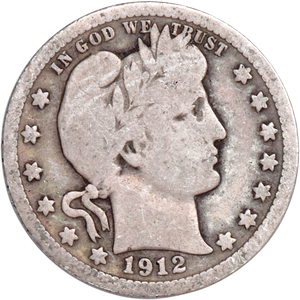
A struck-through error occurs when a foreign substance — most commonly die-lubricating grease but also cloth fibers, wire, or other debris — is trapped between the die face and the planchet at the moment of striking. The contaminating material prevents full metal flow into the corresponding part of the die's relief, resulting in a weak or completely missing design element on the finished coin.
On Barber Quarters, struck-through grease errors most visibly affect the fine details: the LIBERTY headband letters, individual stars, or elements of the eagle's feathering. The struck-through area shows a shallow, incompletely struck impression that differs from normal weakness due to a soft die hub — grease strikes typically have sharp adjacent detail, while soft-strike weakness affects the entire central design. Under a loupe, the grease-filled zone appears smooth and slightly recessed relative to the surrounding struck surface.
Values depend heavily on how dramatically the design is affected and where the weakness falls. A coin with the date obscured by grease is less desirable than one where Lady Liberty's face or LIBERTY inscription is dramatically incomplete but the date remains sharp and legible. Struck-through errors are not typically recognized by die variety attributors like CONECA, but PCGS and NGC do certify them under the mint error category with "Struck Through" notations. These errors are frequently overlooked by non-specialist buyers, making them a legitimate "cherry-picking" opportunity.